Eyebrow Transplant in Turkey
Well-defined eyebrows play an important role in facial appearance, balance, and expression. Thin, sparse, uneven, or partially missing eyebrows can affect the overall appearance of the face and may be caused by genetics, over-plucking, aging, trauma, burns, scars, or other factors.
Eyebrow transplantation is a minimally invasive hair restoration procedure that can restore missing eyebrow hair and create a fuller, more defined, and natural-looking eyebrow shape.
At Turkeymed in Istanbul, Turkey, we provide personalized eyebrow transplant procedures for patients who want to improve eyebrow density, reshape their eyebrows, or restore areas where eyebrow hair has been permanently lost.
Our specialists carefully consider the patient's facial proportions, existing eyebrow hair, desired shape, and donor hair characteristics before creating an individualized treatment plan.
What Is an Eyebrow Transplant?
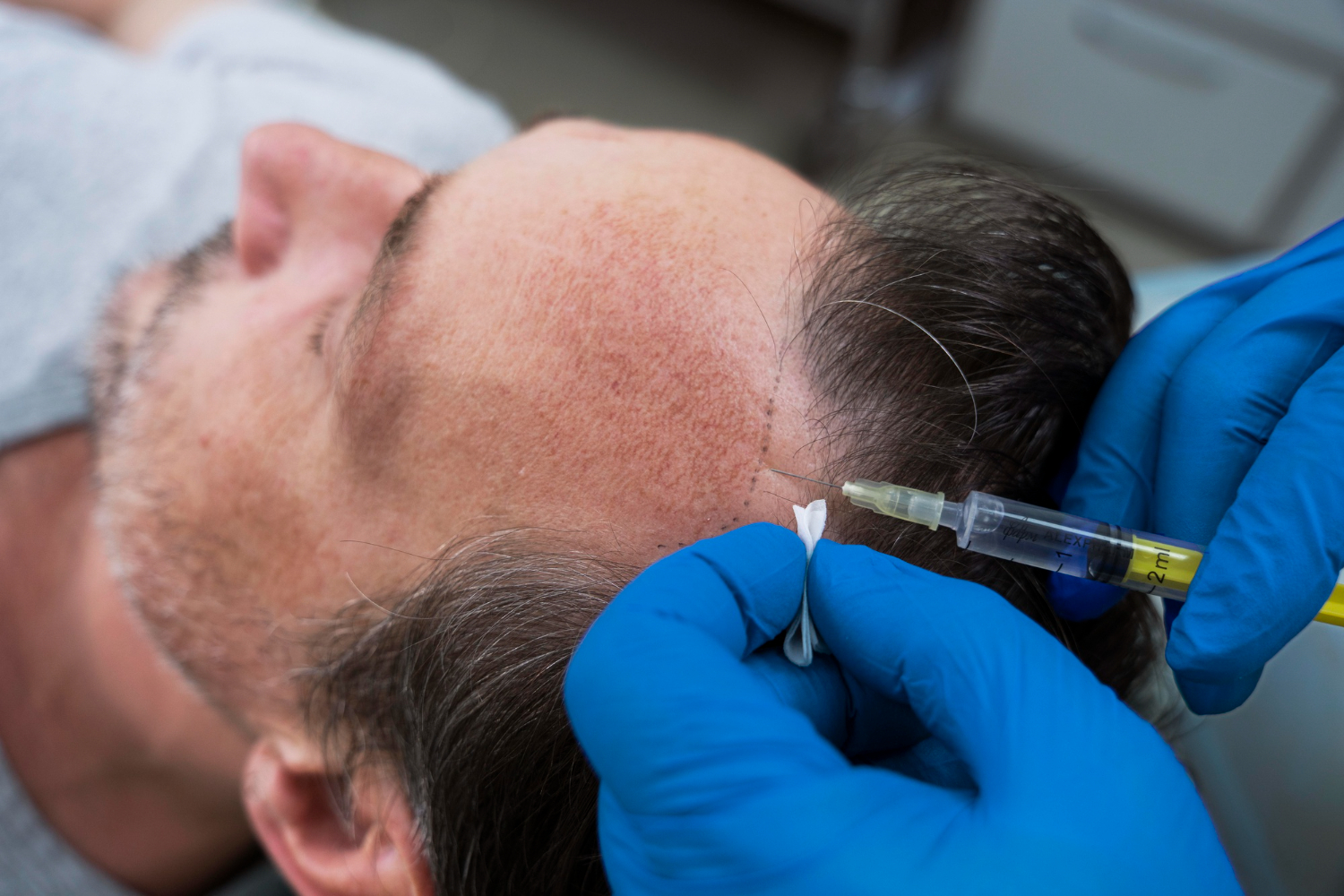
An eyebrow transplant involves transferring individual hair follicles from a suitable donor area, usually the back or sides of the scalp, to areas of the eyebrows where hair is missing or too thin.
Unlike temporary cosmetic solutions such as eyebrow pencils, powders, or microblading, an eyebrow transplant uses the patient's own hair follicles to create actual growing hair in the eyebrow area.
The transplanted follicles can provide long-lasting growth once they successfully establish themselves in the recipient area.
Because eyebrow transplantation is a highly delicate procedure, the angle, direction, depth, and positioning of each follicle are extremely important. Eyebrow hairs naturally grow at a very shallow angle to the skin, and incorrect placement can make the result look unnatural.
For this reason, eyebrow transplantation requires careful planning and specialized experience.
Who Can Benefit From an Eyebrow Transplant?
An eyebrow transplant may be suitable for people experiencing:
Naturally thin or sparse eyebrows
Partial eyebrow hair loss
Over-plucked eyebrows
Age-related eyebrow thinning
Uneven eyebrow density
Missing sections of the eyebrows
Eyebrow hair loss following trauma or injury
Scar-related eyebrow hair loss
A desire for thicker or more defined eyebrows
Asymmetry between the two eyebrows
A medical assessment is necessary to determine whether transplantation is appropriate and whether sufficient donor hair is available.
Why Is Eyebrow Transplantation Different From Scalp Hair Transplantation?
Although both procedures involve transferring hair follicles, eyebrow transplantation requires a different approach.
Eyebrow hairs are generally finer and grow at a much flatter angle than scalp hair. They also have a different growth cycle and require regular trimming when scalp donor hairs are used.
The surgeon or medical team must carefully consider the direction and angle of every graft to follow the natural eyebrow pattern.
The eyebrow design should also match the patient's facial proportions. A good result is not simply about increasing the number of hairs—it is about creating the right shape, density, direction, and transition.
How Is an Eyebrow Transplant Performed?
The procedure is performed under local anesthesia, so the treatment area is numbed before extraction and implantation.
The procedure generally involves the following stages.
1. Consultation and Eyebrow Assessment
Before treatment, the specialist examines the patient's existing eyebrows, facial proportions, donor area, hair characteristics, and areas requiring restoration.
The desired eyebrow shape and density are discussed with the patient.
This stage is particularly important because eyebrow design should be personalized rather than based on a standard template.
2. Eyebrow Design
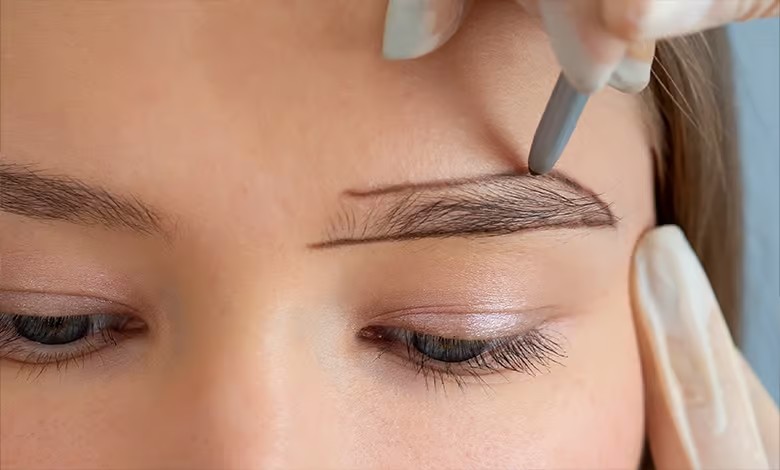
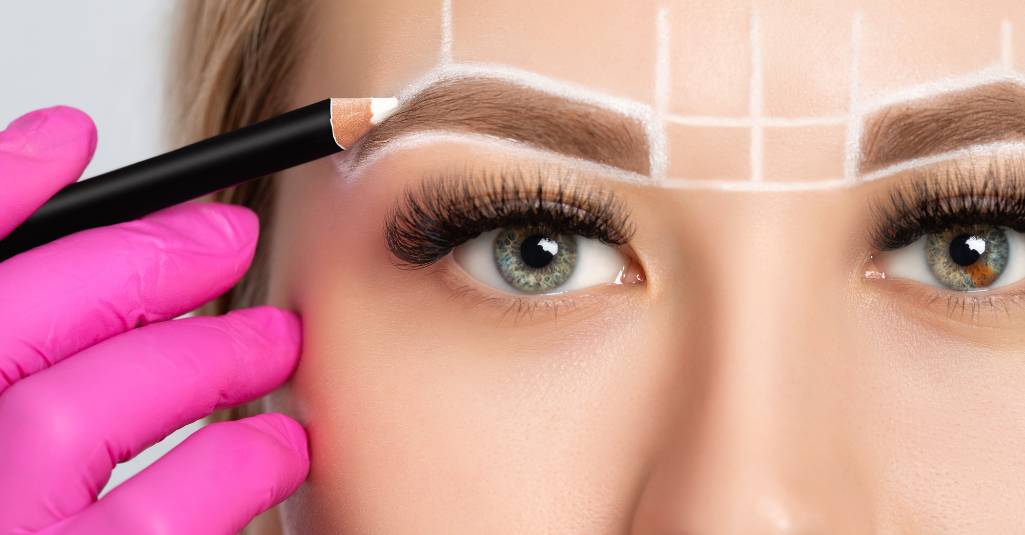
The eyebrow shape is carefully planned according to the patient's facial structure and existing eyebrow pattern.
The specialist considers:
Eyebrow length
Arch position
Inner eyebrow shape
Tail position
Density
Symmetry
Natural hair direction
The objective is to create eyebrows that complement the patient's face while maintaining a natural appearance.
3. Donor Hair Extraction
Hair follicles are generally obtained from the back or sides of the scalp.
Depending on the treatment plan, individual follicles can be extracted using an FUE-based extraction method.
Only suitable follicles are selected for eyebrow transplantation.
4. Graft Preparation
The extracted follicles are carefully prepared for implantation.
Because eyebrow restoration often requires very fine, single-hair grafts, graft selection and handling are particularly important.
Single-hair follicles are commonly preferred because they can better reproduce the fine appearance of natural eyebrow hair.
5. Eyebrow Implantation
The prepared follicles are implanted into the eyebrow area according to the previously designed shape.
Depending on the patient's individual treatment plan, implantation may be performed using a DHI/Choi implanter pen or Sapphire FUE implantation approach.
The specialist carefully controls the:
Angle
Direction
Depth
Position
Spacing
This precision helps the transplanted hairs follow the natural direction of eyebrow growth.
6. Recovery and Hair Growth
After implantation, the eyebrow area begins to heal.
Small scabs, redness, or mild swelling may occur during the initial recovery period.
The transplanted hairs may shed during the first weeks or months. This is a normal part of the hair growth cycle.
New growth develops gradually, and the transplanted hairs become more established as the months pass.
Long Eyebrow Transplant at Turkeymed
A Specialized Approach for a More Natural Eyebrow Restoration
At Turkeymed, we also offer a Long Eyebrow Transplant approach for selected patients.
Traditional eyebrow transplantation commonly involves transplanting follicles from the scalp. Because scalp hair continues to grow throughout its natural cycle, transplanted eyebrow hairs may eventually become longer than natural eyebrow hairs and require regular trimming.
With our Long Eyebrow Transplant approach, the visible length and direction of the transplanted hair can provide the specialist with additional information during the planning and implantation process.
This can be particularly useful when designing the eyebrow shape and assessing the direction and positioning of the transplanted hairs during the procedure.
The concept focuses on preserving and utilizing longer hair characteristics during transplantation rather than immediately reducing the visible hair length.
Why Long Eyebrow Transplant Can Be Helpful
Eyebrow transplantation is highly dependent on accurate placement and natural direction.
Longer visible hairs can help the specialist evaluate the appearance and direction of the transplanted follicles during the procedure.
Potential advantages include:
Better visualization of hair direction
More precise eyebrow design
Improved control during placement
Easier assessment of the planned eyebrow shape
A more individualized transplantation approach
However, the suitability of the Long Eyebrow Transplant approach depends on the patient's hair characteristics, donor area, eyebrow condition, and treatment plan.
It is important to understand that long transplanted eyebrow hairs are still scalp-derived hairs in most cases, meaning they may continue to grow longer than natural eyebrow hairs and may require periodic trimming after the transplant.
The specialist will explain the expected maintenance requirements during the consultation.
Eyebrow Transplant Techniques
Eyebrow transplantation can be performed using techniques related to modern hair transplantation.
FUE
Follicular Unit Extraction (FUE) involves extracting individual hair follicles from the donor area using a micro-punch.
The technique does not involve a linear strip incision and therefore does not produce the linear scar associated with FUT.
DHI
DHI (Direct Hair Implantation) uses a specialized Choi implanter pen to place individual follicles into the recipient area.
The pen can provide precise control over the placement, angle, and direction of each graft.
Sapphire FUE
Sapphire FUE uses sapphire blades when creating recipient sites. The technique can provide precise site creation and may be considered for selected eyebrow transplantation cases.
The most appropriate extraction and implantation approach is determined by the specialist after assessing the patient's eyebrows, donor hair, desired result, and individual characteristics.
How Long Does an Eyebrow Transplant Take?
An eyebrow transplant generally takes approximately 4–6 hours, although the exact duration varies depending on the number of grafts required and the complexity of the treatment.
Eyebrow transplantation requires careful attention to detail, so the procedure should not be rushed.
The number of grafts required depends on factors such as:
Existing eyebrow density
Size of the treatment area
Desired thickness
Degree of hair loss
Desired eyebrow shape
Donor hair availability
Some patients require only a relatively small number of grafts to fill specific gaps, while others may require more extensive restoration.
Is Eyebrow Transplantation Permanent?
Eyebrow transplantation can provide long-lasting and potentially permanent hair growth when the transplanted follicles successfully establish themselves.
However, individual outcomes vary.
Because donor follicles are generally taken from the scalp, the transplanted hairs retain many of their original characteristics. This means that transplanted eyebrow hairs may continue growing longer than natural eyebrow hairs and may need to be trimmed regularly.
The final result depends on factors such as graft survival, donor hair quality, implantation technique, healing, and individual hair-growth characteristics.
Eyebrow Transplant Recovery
Recovery is generally straightforward, but patients should carefully follow the aftercare instructions provided by the medical team.
First Few Days
Mild redness, swelling, sensitivity, or small scabs may appear around the transplanted follicles.
Patients should avoid touching, rubbing, or scratching the eyebrow area.
First Week
The transplanted follicles begin to establish themselves.
Gentle washing should be performed according to the clinic's instructions.
Activities that cause excessive sweating or pressure on the transplanted area may need to be avoided temporarily.
Weeks 2–4
The transplanted hairs may begin to shed.
This is a normal part of the hair growth cycle and does not necessarily indicate that the transplant has failed.
Months 2–4
The follicles gradually enter the active growth phase.
New hairs may begin appearing at different rates.
Months 4–6
The eyebrows gradually become fuller as new hairs continue to grow.
Months 6–12
The transplanted hairs continue to mature and blend with the existing eyebrow hair.
The final appearance is typically assessed around 9–12 months, although individual growth rates vary.
Do Transplanted Eyebrow Hairs Need Trimming?
Yes, in most cases.
When scalp follicles are transplanted to the eyebrows, they retain their original growth characteristics. Scalp hair naturally grows longer than eyebrow hair.
Therefore, transplanted eyebrow hairs may need to be trimmed regularly, often approximately every 1–2 weeks depending on individual growth.
This is an important difference between eyebrow transplantation and natural eyebrow hair.
During the consultation, patients should understand that transplantation provides growing hair, but some ongoing grooming may be required.
What Results Can You Expect?
The goal of eyebrow transplantation is to create eyebrows that look natural and complement the patient's facial features.
Results can include:
Increased eyebrow density
Improved eyebrow shape
Filling of sparse areas
Restoration of missing sections
Better symmetry
Improved definition of the eyebrow arch and tail
The final result depends on the number and quality of transplanted follicles, the natural characteristics of the patient's hair, implantation technique, healing, and aftercare.
Because every patient has different facial features and donor hair characteristics, results cannot be identical for everyone.
Why Choose Turkeymed for Eyebrow Transplant in Turkey?
At Turkeymed in Istanbul, we understand that eyebrow transplantation requires a highly personalized approach.
Our treatment planning focuses on the patient's facial structure, existing eyebrow pattern, donor hair characteristics, and desired appearance.
Our eyebrow transplant service includes:
Personalized eyebrow assessment
Customized eyebrow design
Individual graft planning
FUE-based follicular extraction
DHI/Choi implantation when appropriate
Sapphire FUE options when appropriate
Long Eyebrow Transplant approach for selected patients
Local anesthesia
Post-operative instructions
Follow-up support
International patient assistance
Our team guides patients through the process from the initial consultation and eyebrow design to post-operative care and long-term follow-up.
Start Your Eyebrow Restoration Journey
If you are considering an eyebrow transplant in Turkey, the first step is a personalized assessment.
Send us clear photographs of your eyebrows and donor area so our medical team can evaluate your case and discuss your options.
Whether you want to restore missing eyebrow hair, increase density, correct asymmetry, or create a completely new eyebrow shape, Turkeymed can develop a treatment plan based on your individual needs.
Contact Turkeymed today to learn more about eyebrow transplantation and Long Eyebrow Transplant in Istanbul, Turkey.