
Dental Implant Surgery in Turkey: Complete Guide to Dental Implants
Dental implants are a modern solution for replacing missing teeth and restoring the function, stability and appearance of your smile. They are designed to act as artificial tooth roots and can support individual crowns, bridges or implant-supported dentures.
For patients with tooth loss, successful implant treatment can improve everyday functions such as chewing and speaking while providing a stable alternative to removable dentures.
At Turkeymed, dental implant treatment is planned according to each patient's individual oral health, bone structure, aesthetic goals and long-term dental needs.
What Is a Dental Implant?
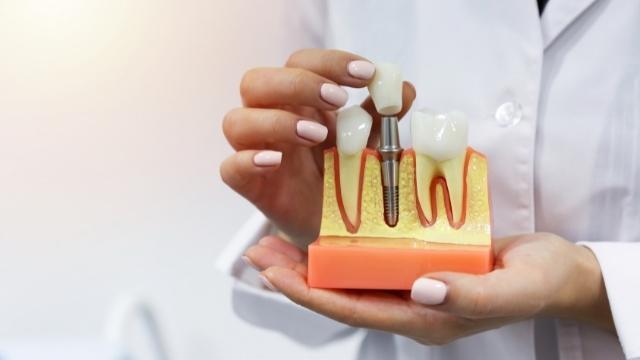
A dental implant is a small medical device, usually made from titanium or another biocompatible material, that is surgically placed into the jawbone.
After placement, the surrounding bone gradually integrates with the implant through a biological process known as osseointegration. Once adequate healing has occurred, the implant can support a dental restoration such as a crown, bridge or denture.
A complete implant-supported tooth usually consists of three main components:
Dental implant – acts as an artificial tooth root.
Abutment – connects the implant to the dental restoration.
Crown – replaces the visible part of the missing tooth.
This structure allows the replacement tooth to be securely supported while restoring much of the function and appearance of a natural tooth.
Dental Implant Surgery in Turkey
Dental implant surgery involves placing the implant into the jawbone at a carefully planned position.
Before surgery, the dentist evaluates the teeth, gums and available bone. X-rays or 3D imaging such as CBCT may be used to assess the anatomy and determine the appropriate implant position.
How Is a Dental Implant Placed?
The procedure generally follows several stages.
1. Dental Examination and Treatment Planning
Your dentist first evaluates:
Missing teeth
Remaining teeth
Gum health
Jawbone volume and density
Bite and occlusion
Overall oral health
Aesthetic requirements
Digital imaging may be used to determine the position of nerves, sinuses and other anatomical structures.
2. Local Anesthesia
The treatment area is numbed with local anesthesia so that the surgical procedure can be performed comfortably.
Sedation may also be considered for selected patients who experience significant dental anxiety or when recommended by the dental team.
3. Preparing the Implant Site
The dentist creates a carefully controlled space in the jawbone for the implant.
The preparation must take into account the patient's bone quality, implant dimensions and surrounding anatomical structures.
4. Implant Placement
The dental implant is inserted into the prepared site.
The implant must be positioned accurately to provide appropriate support for the future restoration and to maintain healthy surrounding tissues.
5. Healing and Osseointegration
Following placement, the implant undergoes a healing period during which it integrates with the surrounding bone.
The length of this period varies depending on the individual patient, implant location, bone quality and whether additional procedures were performed.
6. Abutment and Crown
Once the implant has healed sufficiently, the dentist proceeds with the restorative stage.
Depending on the treatment plan, an abutment is connected to the implant and a custom-made crown is fabricated and fitted.
Why Is Bone Quality Important for Dental Implants?
The quality and quantity of the jawbone are important factors in implant treatment.
When a natural tooth is lost, the bone that previously supported the tooth can gradually shrink. This process, known as bone resorption, may reduce the amount of bone available for implant placement.
Some patients have enough bone for immediate implant placement, while others may require a bone augmentation procedure.
The dentist determines this through clinical examination and appropriate imaging.
Bone Grafting for Dental Implants
A bone graft may be recommended when there is insufficient bone volume to provide appropriate support for an implant.
Bone augmentation can increase the available bone in areas where resorption has occurred.
Depending on the case, grafting materials may include:
Patient-derived bone
Donor-derived bone
Animal-derived graft materials
Synthetic bone substitutes
The appropriate material depends on the clinical situation and the dentist's treatment plan.
Bone grafting can sometimes be performed before implant placement, while in selected cases it may be performed during the same treatment stage.
Sinus Lift for Dental Implants
The back part of the upper jaw can present a particular challenge because the maxillary sinus is located above the area where upper molars and premolars are commonly found.
After tooth loss, bone resorption may reduce the available vertical bone height.
A sinus lift, also known as sinus augmentation, is a procedure used to increase the available bone in this region.
During the procedure, the sinus membrane is carefully elevated and bone-grafting material may be placed beneath it.
The exact technique depends on the amount of available bone and the individual anatomy.
Ridge Augmentation
In some patients, the jawbone may have lost significant width or height after tooth loss.
Ridge augmentation is a bone-grafting procedure designed to increase the dimensions of the jaw ridge when necessary.
It may be considered when the existing ridge is too narrow or insufficient to provide the desired foundation for implant placement.
Depending on the patient's condition, ridge augmentation and implant placement may be performed as separate stages or, in selected cases, during the same treatment plan.
Dental Implant Structure and Function
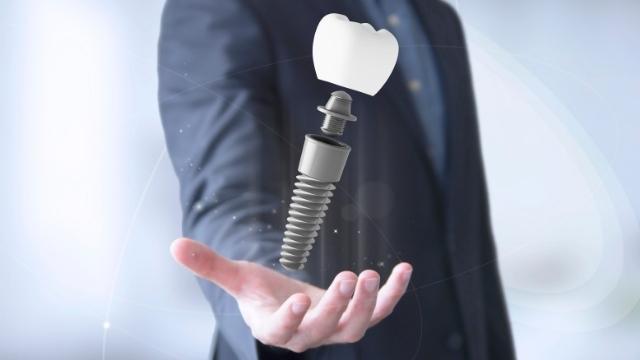
A dental implant restoration is generally composed of three parts.
1. Implant
The implant is placed inside the jawbone and functions as an artificial tooth root.
2. Abutment
The abutment connects the implant to the crown or another dental restoration.
3. Crown
The crown is the visible replacement tooth.
Modern crowns can be produced using materials such as zirconia or dental ceramics and can be designed to match the surrounding teeth in shape, size and shade.
Types of Dental Implants
Dental implants can be used in different treatment configurations depending on how many teeth are missing and the condition of the patient's mouth.
Single Tooth Implant
A single implant can be used to replace one missing tooth.
An implant-supported crown can provide a fixed replacement without requiring the adjacent healthy teeth to serve as bridge supports.
Implant-Supported Bridge
When several adjacent teeth are missing, implants can be used to support a bridge.
This can provide a fixed alternative to a removable partial denture in suitable patients.
Full-Arch Implant Treatment
Patients who have lost most or all of their teeth may be candidates for an implant-supported full-arch restoration.
Depending on the individual case, several strategically positioned implants can support a complete dental arch.
All-on-6 Dental Implants
The term All-on-6 generally refers to a full-arch restoration supported by six implants in a jaw.
The exact number and position of implants must be determined according to the patient's bone anatomy, dental condition and treatment plan.
All-on-4 Dental Implants
All-on-4 treatment uses four implants to support a full-arch restoration in selected patients.
Not every patient is suitable for this approach. A detailed examination and 3D imaging are important before deciding whether an All-on-4 or All-on-6 concept is appropriate.
What Is Full-Mouth Dental Implant Treatment?
Full-mouth dental implant treatment is designed for patients who have lost most or all of their teeth, or whose remaining teeth cannot be predictably restored.
The objective is to restore:
Chewing function
Dental stability
Speech
Facial support
Smile aesthetics
Overall oral function
A full-mouth treatment can involve different approaches depending on the patient's condition.
Diagnostic and Planning Stage
Treatment planning may include:
Dental examination
Panoramic X-ray
CBCT/3D scan
Digital impressions
Bite analysis
Smile design
Photographs
Assessment of existing teeth
Evaluation of bone and gum condition
Implant Placement
The required implants are positioned according to the treatment plan.
The number of implants varies depending on the selected restoration and the patient's anatomy.
Temporary Restoration
In selected cases, a temporary fixed restoration may be provided during the healing period.
Final Restoration
Once the implants have healed and the dentist confirms that they are ready, the final prosthetic restoration can be fabricated and fitted.
The final restoration may be made from different materials depending on the patient's functional and aesthetic requirements.
How Painful Is Dental Implant Surgery?
Dental implant placement is usually performed under local anesthesia, which numbs the treatment area during surgery.
You may experience pressure or vibration during certain stages of the procedure, but significant pain during surgery should be controlled with appropriate anesthesia.
After the anesthesia wears off, some discomfort can occur.
Common temporary effects include:
Mild to moderate soreness
Swelling
Bruising
Tenderness around the surgical area
Minor bleeding
The intensity varies from person to person and can also depend on the number of implants and whether additional procedures such as bone grafting were performed.
Pain medication may be recommended by your dentist when appropriate.
How Long Does Dental Implant Recovery Take?
There are two different aspects of recovery:
Initial Recovery
Swelling and discomfort are usually most noticeable during the first few days and generally begin to improve afterward.
Following your dentist's postoperative instructions can help support recovery.
Osseointegration
The deeper biological healing process takes longer.
During osseointegration, the implant becomes integrated with the surrounding jawbone.
The time required varies depending on:
Bone quality
Implant location
Number of implants
General oral health
Smoking
Bone grafting
Sinus lift
Individual healing response
Your dentist will determine when the implant is sufficiently stable for the next stage of treatment.
What Are the Benefits of Dental Implants?
Dental implants can provide several potential advantages for appropriately selected patients.
Improved Chewing Function
A stable implant-supported restoration can make eating more comfortable compared with some removable dental appliances.
Fixed Tooth Replacement
Unlike conventional removable dentures, implant-supported teeth are designed to remain fixed in place.
Natural-Looking Appearance
The crown can be customized to match the surrounding teeth in shape, size and color.
Support for Dental Restorations
Implants can support individual crowns, bridges and full-arch restorations.
Helps Preserve Jawbone
Because an implant is placed in the jawbone, it can provide functional stimulation to the surrounding bone and may help reduce the bone resorption associated with tooth loss.
Improved Confidence
Replacing missing teeth can improve confidence when smiling, speaking and eating.
How Long Do Dental Implants Last?
Dental implants are designed as a long-term tooth replacement solution.
However, their longevity depends on several factors, including:
Oral hygiene
Gum health
Bone condition
Smoking
Bite forces
Implant position
Quality of the restoration
Regular dental examinations
Proper maintenance
The implant fixture can remain functional for many years, while the crown or prosthetic restoration may require maintenance, repair or replacement over time.
There is no universal lifetime guarantee for every patient or every component, so long-term maintenance and regular dental care remain important.
Dental Implant Warranty
Turkeymed can provide warranty documentation for eligible implant treatments according to the specific implant system, treatment agreement and applicable legal terms.
The warranty conditions may differ depending on the implant manufacturer and the component covered.
Patients should receive clear information about:
The implant brand
Components covered
Warranty duration
Conditions of the warranty
Follow-up requirements
Situations that may invalidate the warranty
A dental implant warranty does not replace the need for regular dental check-ups and appropriate oral hygiene.
Who Is a Good Candidate for Dental Implants?
Dental implants may be considered for adults who have:
One or more missing teeth
Severely damaged teeth that cannot be restored
Difficulty using removable dentures
Adequate bone support
Healthy or manageable gum conditions
A desire for a fixed tooth replacement
Patients with insufficient bone may still be candidates after procedures such as bone grafting or sinus augmentation.
Certain medical conditions, medications and lifestyle factors may affect treatment suitability and healing.
A dentist should evaluate your individual medical and dental history before treatment.
What Can Cause Dental Implant Failure?
Dental implant treatment has high long-term survival rates, but complications can occur.
Possible causes include:
Inadequate Osseointegration
The implant may fail to integrate adequately with the surrounding bone.
Peri-Implant Disease
Inflammation and infection around an implant can affect the surrounding tissues and may contribute to bone loss.
Poor Oral Hygiene
Insufficient plaque control can increase the risk of gum and implant-related problems.
Smoking
Smoking can negatively affect healing and oral health.
Insufficient Bone Support
Inadequate bone volume or poor bone quality can affect implant stability.
Excessive Mechanical Forces
Heavy biting forces, teeth grinding and other mechanical stresses can contribute to complications affecting the implant or restoration.
Inadequate Treatment Planning
Proper diagnosis, imaging and treatment planning are important for achieving predictable outcomes.
If an implant becomes loose or you develop persistent pain, swelling, bleeding or discharge, you should contact your dentist promptly.
How to Care for Dental Implants After Surgery
Good oral hygiene is essential for maintaining your implants and surrounding tissues.
Brush Your Teeth
Brush at least twice a day using a suitable toothbrush and toothpaste.
Clean Between Your Teeth
Your dentist may recommend dental floss, interdental brushes or specialized cleaning tools.
Follow Postoperative Instructions
Follow the specific instructions provided by your dental team regarding food, brushing, medication and physical activity.
Avoid Smoking
Avoiding tobacco can support oral health and healing.
Attend Regular Dental Check-Ups
Regular examinations allow the dentist to monitor the implant, gums, bone and restoration.
Dental Implants vs Dentures
Dental implants and dentures are different approaches to replacing missing teeth.
Dental implants are fixed into the jawbone and can support individual crowns, bridges or implant-supported dentures.
Traditional dentures are removable and rest on the gums.
The most appropriate solution depends on:
Number of missing teeth
Bone condition
Gum health
Budget
Medical history
Personal preferences
Long-term treatment goals
Your dentist can explain which option is most appropriate after examining your mouth.
Dental Implants vs Dental Bridges
A traditional dental bridge usually relies on neighboring teeth for support.
An implant-supported restoration uses dental implants as the foundation.
For a single missing tooth, an implant-supported crown may allow the adjacent teeth to remain independent of the restoration.
However, implants are not automatically the best option for every patient. The condition of the neighboring teeth and jawbone should be considered.
Why Choose Turkeymed for Dental Implants in Turkey?
Turkeymed provides personalized dental treatment for international patients visiting Istanbul.
Individual Treatment Planning
Each patient's dental condition is assessed individually before treatment.
Experienced Dental Professionals
Treatment is planned and performed by dental professionals according to the patient's clinical requirements.
Modern Diagnostic Methods
Dental imaging and diagnostic techniques can be used to evaluate the teeth, gums and jawbone.
Quality Implant and Restoration Options
Implant systems and restorative materials are selected according to the treatment plan.
International Patient Support
Turkeymed helps international patients coordinate consultations, appointments, transportation and their treatment schedule in Istanbul.
Comprehensive Dental Treatment
Patients can combine implant treatment with other dental procedures when clinically appropriate, including:
Zirconium crowns
Laminate veneers
Porcelain veneers
Dental bridges
Smile design
Root canal treatment
Professional dental cleaning
Dental Implant Treatment in Istanbul
Istanbul is a popular destination for international dental patients because it combines access to dental services with convenient international travel.
At Turkeymed, the treatment journey can begin before you travel.
You can send:
Dental photographs
Previous X-rays
Dental records
Information about missing teeth
Details about previous dental treatments
Our team can use the available information for an initial assessment. A final treatment plan should always be confirmed by the dentist after an appropriate clinical examination and diagnostic evaluation.
Start Your Dental Implant Treatment in Turkey
If you are considering dental implant surgery in Turkey, Turkeymed can help you understand your treatment options and plan your visit to Istanbul.
Send us your dental photographs and available X-rays for an initial assessment. Our dental team can review your case and determine which diagnostic examinations and treatment options may be appropriate.
Turkeymed – Personalized Dental Implant Treatment in Istanbul, Turkey.