
Dental Implants in Turkey: Cost, Procedure, Recovery & Benefits
Dental implants are one of the most reliable options for replacing missing teeth and restoring both function and appearance. For international patients, dental implants in Turkey can provide access to experienced dental professionals and modern implant systems at competitive prices compared with many Western European countries, the UK, the USA, and Canada.
At Turkeymed, every dental implant treatment begins with an individual assessment. The dentist evaluates your teeth, gums, jawbone and overall oral health before recommending the most suitable treatment plan.
Dental Implant Cost in Turkey
The cost of dental implants in Turkey depends on several factors, including:
The number of implants required
The implant brand and material
Whether a bone graft or sinus lift is necessary
The type of abutment
The type of crown used
The condition of the gums and remaining teeth
Whether several teeth or a full arch need to be restored
At Turkeymed, a single dental implant package may typically range from approximately €650 to €1,350, depending on the treatment plan and the materials selected.
The treatment may include:
Dental implant fixture
Abutment
Zirconium or porcelain crown
Dental consultation
Required diagnostic imaging
The exact price is confirmed after reviewing your dental condition and treatment requirements.
Why Are Dental Implants More Affordable in Turkey?
One of the main reasons international patients consider Turkey for dental treatment is the difference in treatment costs.
Dental clinics in Turkey generally have lower operating and labor costs than clinics in countries such as the UK, USA, and Canada. This can make complex treatments considerably more affordable without necessarily compromising the quality of the materials or clinical care.
However, patients should always compare what is included in the quoted price, rather than comparing the price of the implant alone.
What Is Included in a Dental Implant?
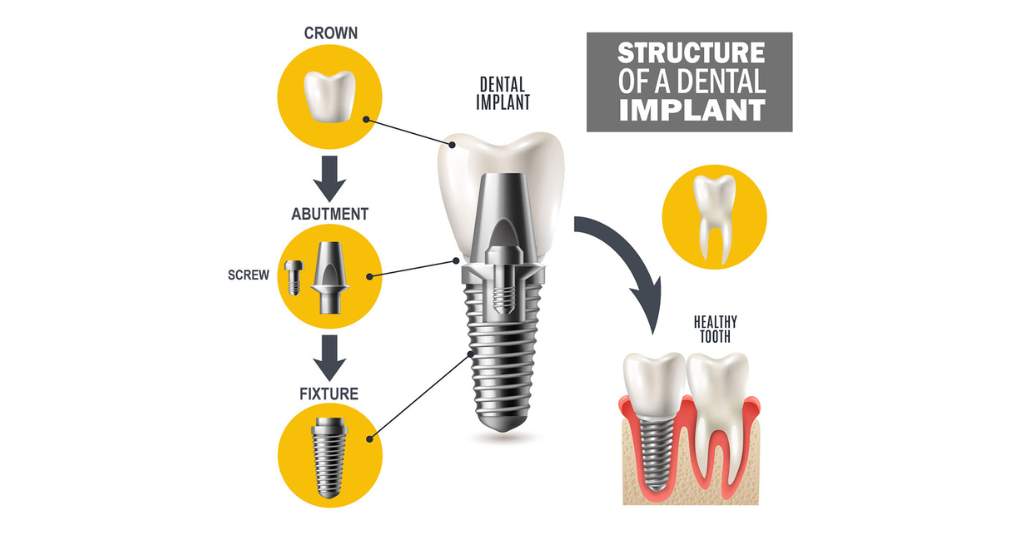
A dental implant restoration normally consists of three main components.
1. Dental Implant
The implant is a small titanium or other biocompatible fixture placed into the jawbone. It functions as an artificial tooth root and provides support for the restoration.
2. Abutment
The abutment connects the dental implant to the visible dental restoration.
3. Dental Crown
The crown is the visible part of the replacement tooth. It is designed to restore the appearance and function of the missing tooth.
Because each component contributes to the final result, it is important to ask:
“What is the total cost of the complete dental implant treatment?”
A low advertised implant price may not always include the abutment, crown, imaging, temporary restoration or additional procedures.
Dental Implants in Turkey: Is It Worth It?
For many international patients, traveling to Turkey for dental implants can be financially attractive, particularly when several teeth require treatment.
The potential savings can become more significant when treatment involves multiple implants, crowns, bridges or full-mouth rehabilitation.
Patients may also combine dental implants with other treatments, including:
Zirconium crowns
Laminate veneers
Porcelain veneers
Dental bridges
Smile design
Teeth whitening
Root canal treatment
Professional dental cleaning
The suitability of each treatment depends on your individual dental condition.
How Long Do You Need to Stay in Turkey for Dental Implants?
The required travel time depends on your treatment plan.
A dental implant treatment may involve more than one stage because the implant needs time to integrate with the jawbone before the final crown is placed.
First Visit
During the first visit, the dentist may:
Perform a dental examination
Take an X-ray or 3D scan when required
Assess the gums and jawbone
Discuss your treatment plan
Place the dental implant
Perform additional procedures such as bone grafting or sinus lifting if necessary
The first visit may take several days depending on the complexity of the case.
Healing Period
After implant placement, the implant generally requires a period of healing and osseointegration, during which it becomes integrated with the surrounding bone.
The duration varies between patients and depends on factors such as bone quality, implant location and whether additional procedures were performed.
Second Visit
Once healing is sufficient, the dentist can proceed with the next stage:
Implant assessment
Abutment placement when appropriate
Digital impressions or traditional impressions
Crown preparation
Final crown placement
Some patients may require a longer treatment schedule, while certain cases can be managed with immediate or temporary restorations.
Your dentist should determine the exact travel schedule after reviewing your X-rays or scans.
Dental Implant Treatment at Turkeymed
At Turkeymed, we focus on providing personalized dental treatment for international patients visiting Istanbul.
Your treatment starts with a dental evaluation rather than a standard package.
Your Treatment Journey
1. Initial Consultation
You can send your dental photographs and available X-rays for an initial assessment.
2. Treatment Planning
Our dental team reviews your case and determines which treatments may be appropriate.
3. Examination in Istanbul
Before treatment, the dentist evaluates your oral health and may request additional imaging when necessary.
4. Implant Placement
The implant is placed according to the approved treatment plan.
5. Healing & Follow-Up
Your dentist provides postoperative instructions and monitors the healing process.
6. Final Restoration
Once the implant has integrated sufficiently, the final crown or restoration can be fitted.
Dental Implant Materials and Brands
The implant system is an important part of treatment planning.
Depending on your case and treatment requirements, different implant systems may be available. Your dentist will recommend an appropriate option based on factors such as bone condition, implant location, restoration type and long-term treatment objectives.
The crown material is also important. At Turkeymed, dental restorations may include zirconium crowns and other high-quality ceramic materials depending on the treatment plan.
How Long Do Dental Implants Last?
Dental implants are designed to provide long-term tooth replacement, but their lifespan depends on several factors.
These include:
Oral hygiene
Gum health
Bone condition
Smoking
Bite forces
Implant position
Quality of the restoration
Regular dental examinations
The implant fixture itself can remain functional for many years and, in some patients, may last for decades. The crown is exposed to daily chewing forces and may eventually need repair or replacement.
Regular dental check-ups and good oral hygiene are essential for maintaining the health of your implant.
How Long Does Recovery Take After a Dental Implant?
Recovery varies from person to person.
Immediately after surgery, you may experience:
Mild swelling
Tenderness
Minor bleeding
Bruising
Temporary discomfort
These symptoms generally improve during the first few days.
The more important part of implant treatment is the biological healing period. Osseointegration can take several months, depending on the patient and the treatment performed.
Your dentist will determine when the implant is ready for the final restoration.
How to Care for Your Dental Implants
Dental implants should be cared for carefully, just like natural teeth.
Brush Regularly
Brush your teeth at least twice a day using an appropriate toothbrush and toothpaste. Pay particular attention to the gum line.
Clean Between Your Teeth
Floss, interdental brushes or other cleaning tools recommended by your dentist can help remove food debris and plaque around the implant.
Use Mouthwash When Recommended
Your dentist may recommend an appropriate antibacterial mouthwash, particularly during certain stages of recovery.
Attend Regular Dental Check-Ups
Regular examinations allow your dentist to monitor your gums, implant and restoration.
Avoid Smoking
Smoking can negatively affect gum health and may increase the risk of complications around dental implants.
Can Dental Implants Fail?
Dental implants have high long-term survival rates, but no medical procedure can guarantee success in every patient.
Implant complications may occur because of factors such as:
Failed Osseointegration
In some cases, the implant does not integrate adequately with the surrounding bone. This may result in implant instability.
Peri-Implantitis
Peri-implantitis is an inflammatory condition affecting the tissues around an implant and may be associated with bone loss.
Mechanical Complications
The implant, abutment or crown can occasionally experience mechanical problems, including loosening, fracture or wear.
Patient-Related Factors
Smoking, poor oral hygiene, uncontrolled medical conditions, inadequate bone support and other factors can influence implant outcomes.
If you experience persistent pain, swelling, bleeding, discharge, or notice that an implant feels loose, contact your dentist promptly.
Who Is a Good Candidate for Dental Implants?
Dental implants may be suitable for adults who have:
One or more missing teeth
Teeth that cannot be restored
Difficulty with conventional dentures
A desire for a fixed tooth replacement
Adequate bone support or the possibility of bone augmentation
Some patients with insufficient bone may still be candidates after procedures such as bone grafting or sinus lifting.
A dental examination and appropriate imaging are necessary to determine suitability.
Dental Implants for Multiple Missing Teeth
Dental implants are not limited to replacing a single tooth.
Depending on your condition, implants can also support:
Implant-supported bridges
Multiple crowns
Implant-supported dentures
Full-arch restorations
In some cases, several missing teeth can be restored using fewer implants than the number of teeth being replaced.
The appropriate approach depends on your bone structure, remaining teeth, bite and overall oral health.
Dental Implants vs Dental Bridges
Both implants and bridges can replace missing teeth, but they work differently.
A traditional bridge generally relies on neighboring teeth for support, while a dental implant is placed into the jawbone and can support an individual crown or bridge.
Your dentist can explain which option is more appropriate based on the condition of your neighboring teeth and jawbone.
Why Choose Turkeymed for Dental Implants in Turkey?
Turkeymed supports international patients throughout their dental treatment journey in Istanbul.
Personalized Treatment Planning
Every patient receives an individual assessment and treatment plan.
International Patient Support
We assist international patients with treatment coordination, appointments, transportation and communication throughout their visit.
Modern Dental Techniques
Our dental treatments use modern diagnostic and restorative techniques according to the patient's needs.
Quality Materials
Implant and restoration options are selected according to the patient's clinical requirements and treatment plan.
Dental Assessment
Before treatment, the dentist evaluates your oral health and may request X-rays or 3D imaging to assess the teeth and jawbone.
Transparent Treatment Planning
We explain the recommended procedures and provide a treatment plan before treatment begins.
Start Your Dental Implant Treatment in Turkey
If you are considering dental implants in Turkey, send us your dental photographs and available X-rays for an initial assessment.
Our team can review your case, discuss possible treatment options and provide an individualized treatment plan for your visit to Istanbul.
Contact Turkeymed today to learn more about dental implant treatment in Turkey.